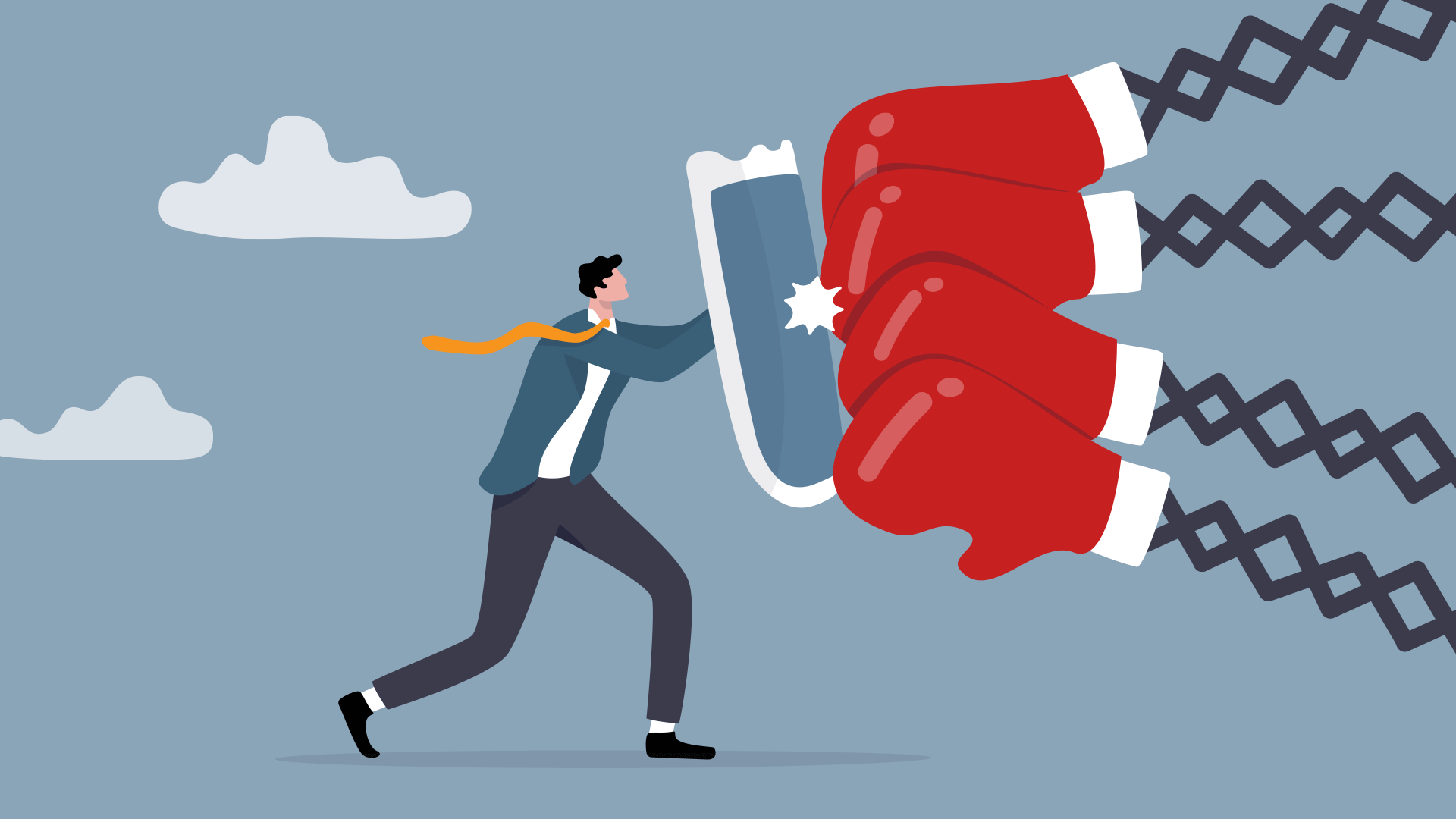
Life hardly ever turns out the way you planned
Things happen, thoughts race, and the words you use suddenly dictate more about you than anything else. Those are the moments when you can choose to become stronger or accept defeat, and that’s where resilience comes in. Resilience is often described as the ability to bounce back from a tough situation, but it goes so much deeper than outward behavior or pretending you weren’t affected by difficulty. It’s more about how you think when things don’t go as planned. The meaning you give life’s detours, challenges, and unexpected events dictates what happens next in your world. Whether you see them as helpful opportunities or frustrating roadblocks shapes what you look for going forward. Resilience is less about avoiding the impact and more about how you process it and move forward.
Two people can experience the same setback and walk away with two completely different perspectives. One person might get into a defeated mindset and think, “This proves I can’t do it,” while the other might ask, “What do I need to learn from this?” The circumstances might be exactly the same, but the two ways of looking at the situation are entirely opposite of one another. People often get it wrong when they assume resilient thinking means forcing themselves to see only the positive. We experience that confusion when loved ones offer advice similar to “look on the bright side” or “it’s not all that bad” in difficult situations. While those consolations might be logical in some situations, they ignore the idea that frustration, sadness, or anger still exist. Resilient thinking isn’t about denying reality or the fact that you feel an emotion. It’s about seeing things objectively without allowing one difficult moment or outcome to define everything that comes after it.
Resilience also means understanding what you can control versus what you can’t
You can’t control another person’s actions or decisions, a policy change, an unexpected problem, or an outcome you worked hard to achieve. In any of those situations, you can only control your response. You control the questions you ask, the actions you take, the adjustments you make, and where you put your energy. Spending time fighting circumstances you can’t change, especially ones that have already happened, takes energy away from what you can still influence. The past already happened. The present is what you choose to see, and the future is based on the actions you take as a result.
Resilient people learn to treat obstacles as critical data. Instead of immediately concluding that their experiences and results were failures, they look at what information the experience offered and how it translates into a useful lesson. Looking at what worked, what didn’t, what you missed, and what you’d do differently next time builds deeper awareness that moves you away from anger, resentment, or judgment. That awareness creates a tool you can use. Ultimately, it comes down to uncovering if you need to adjust one of three things: strategy, preparation, or direction. The most important part of that discovery, though, is the willingness to look honestly at what happened and use it.
That’s where resilience teaches that it has to come with action. Being able to think differently because of what you’ve learned is important, but eventually that thinking needs to lead somewhere. Otherwise, a cycle of masked repetition can happen. Lack of confidence, not knowing how things may work out, or disappointment with a new process may still occur, but progress doesn’t need motivation to start. It needs action. Worrying about future difficulties is like using an umbrella indoors. It’s preparation for a storm you might not have to weather.
Resilience isn’t something you either have or don’t. It’s something you need to practice
Every difficult conversation, unexpected setback, missed opportunity, change in direction, or challenge gives you a way to strengthen how you respond. Your goal should never be to claim you are unaffected or apathetic to the challenge, but to get better at moving through it with perspective, intention, and appropriate action.
So, the next time something doesn’t go the way you expect or want, instead of letting yourself get distorted, try asking yourself, “What’s my next best move?”
That internal conversation is the muscle you train to build resilience.